

Solar Power Knowledge
How to Choose a Solar Panel Manufacturer: 7 Verification Steps for 2026
 高土
高土
Article summary: This guide provides 7 practical verification steps to distinguish genuine solar panel manufacturers from trading companies. It covers Tier 1 status, factory entity checks, production capacity audits, OEM capability, warranty terms, export records, and sample-to-bulk consistency. Designed for distributors, EPCs, and project buyers who need a reliable supplier qualification process.
Quick answer: To verify a real solar panel manufacturer, check Tier 1 status and certifications (IEC 61215, IEC 61730, UL, CE), confirm the legal factory entity and production capacity, request a live video factory tour, review warranty and insurance, check export records, and compare sample vs bulk consistency. Any supplier refusing these steps is likely a trader.
Searching for a solar panel manufacturer is easy. Finding a real one is harder. The word “manufacturer” is used loosely — by factories, by trading companies, by exporters, and sometimes by resellers with no production capacity at all.
If you are buying at container volume, the difference between a real factory and a middleman can mean 10–30% on price, weeks on lead time, and everything on warranty enforcement.
This guide gives you 7 verification steps to separate real manufacturers from traders. It is written for distributors, EPCs, and project buyers who need a repeatable supplier qualification process.
If you are still defining your price target, start with our guide to wholesale solar panel pricing. If you are planning a full container, see bulk solar panel orders. And if you want to understand the direct-from-factory model, read factory direct solar panels.
1. Why Choose a Manufacturer Instead of a Trader?
Before the verification steps, it helps to understand what you gain — and what you give up.
What you gain
What you give up
-
Smaller order flexibility (factories have MOQ)
-
Less local stock and faster delivery
-
Less multi-brand mixing in one order
Key point: a manufacturer is the right choice when you have volume, a clear spec, and the ability to verify. If you need 20 panels next week, a distributor is the better partner.
2. Step 1 — Check Tier 1 Status and Certifications
Tier 1 is the most misunderstood term in solar. It does not mean “best quality.” It means the manufacturer meets BloombergNEF’s bankability criteria, which is primarily based on:
-
Having supplied modules to at least six large-scale projects
-
Being bankable for project financing
-
Meeting production volume thresholds
Certifications you must verify
How to verify: Ask for the certificate number and issuing body. Do not accept a logo on a PDF. Cross-check with the issuing laboratory or certification body.
Supporting reference: BloombergNEF publishes the Tier 1 list quarterly. IEC 61215 and IEC 61730 are the baseline international module standards. IEC 62941 is specific to PV manufacturing quality systems.
3. Step 2 — Verify the Factory Entity
Many “manufacturers” are trading companies with a factory photo on their website. Verify the legal entity.
What to request
-
Business license (with registered capital and scope)
-
Production license or manufacturing permit
-
Factory address (not just an office address)
-
Company registration number
What to check
-
Does the business scope include manufacturing, or only trading?
-
Is the registered capital consistent with a real production facility?
-
Is the factory address in an industrial zone, or a office building?
How to verify: Cross-check the company name in your country’s import records or a trade data platform such as ImportGenius or Panjiva. If the company appears as a buyer of cells and a seller of modules, that is a good sign. If it only appears as a seller, it may be a trader.
Supporting reference: China’s National Enterprise Credit Information Publicity System allows public verification of registered business scope.
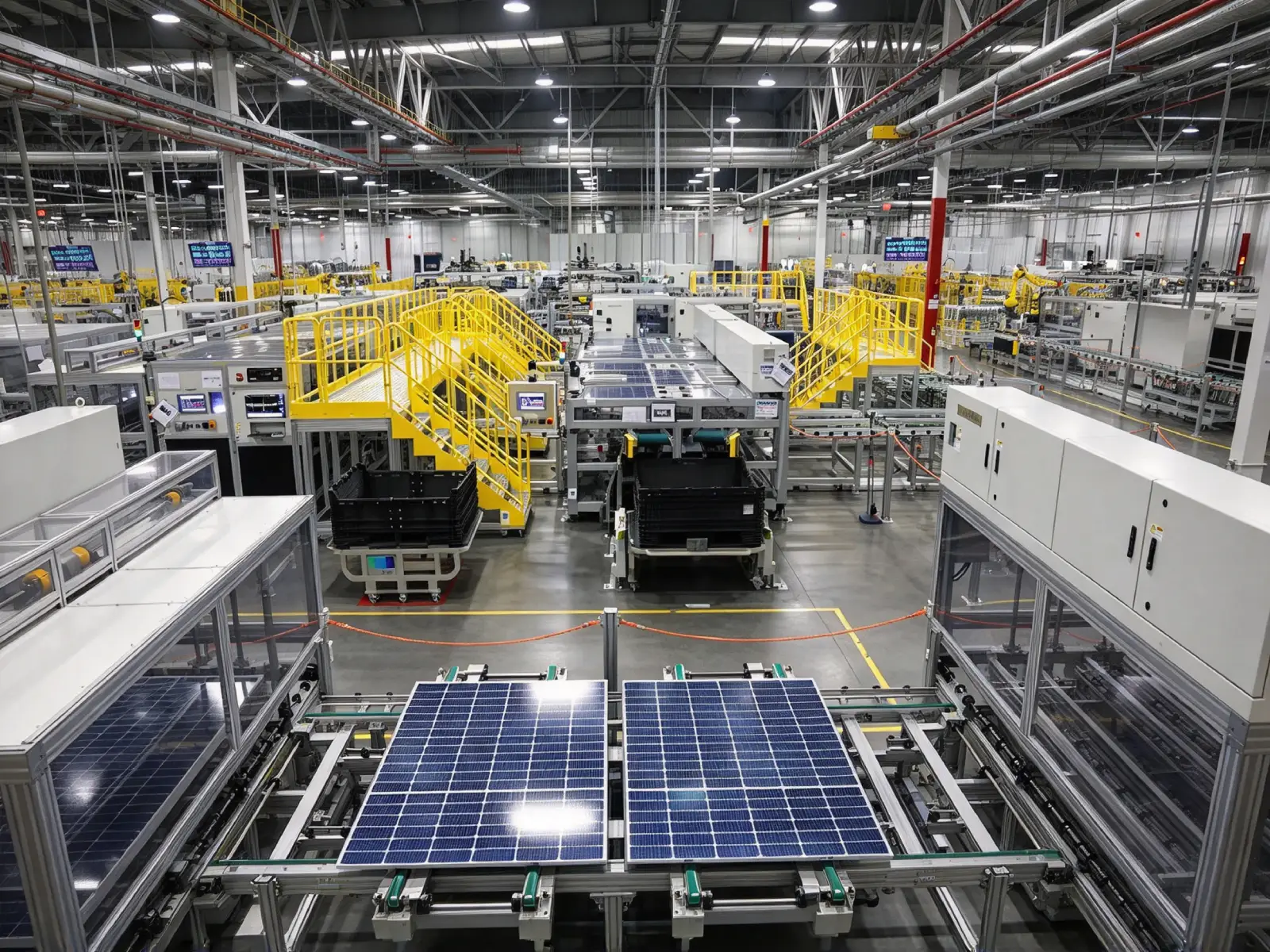
4. Step 3 — Audit Production Capacity and Lines
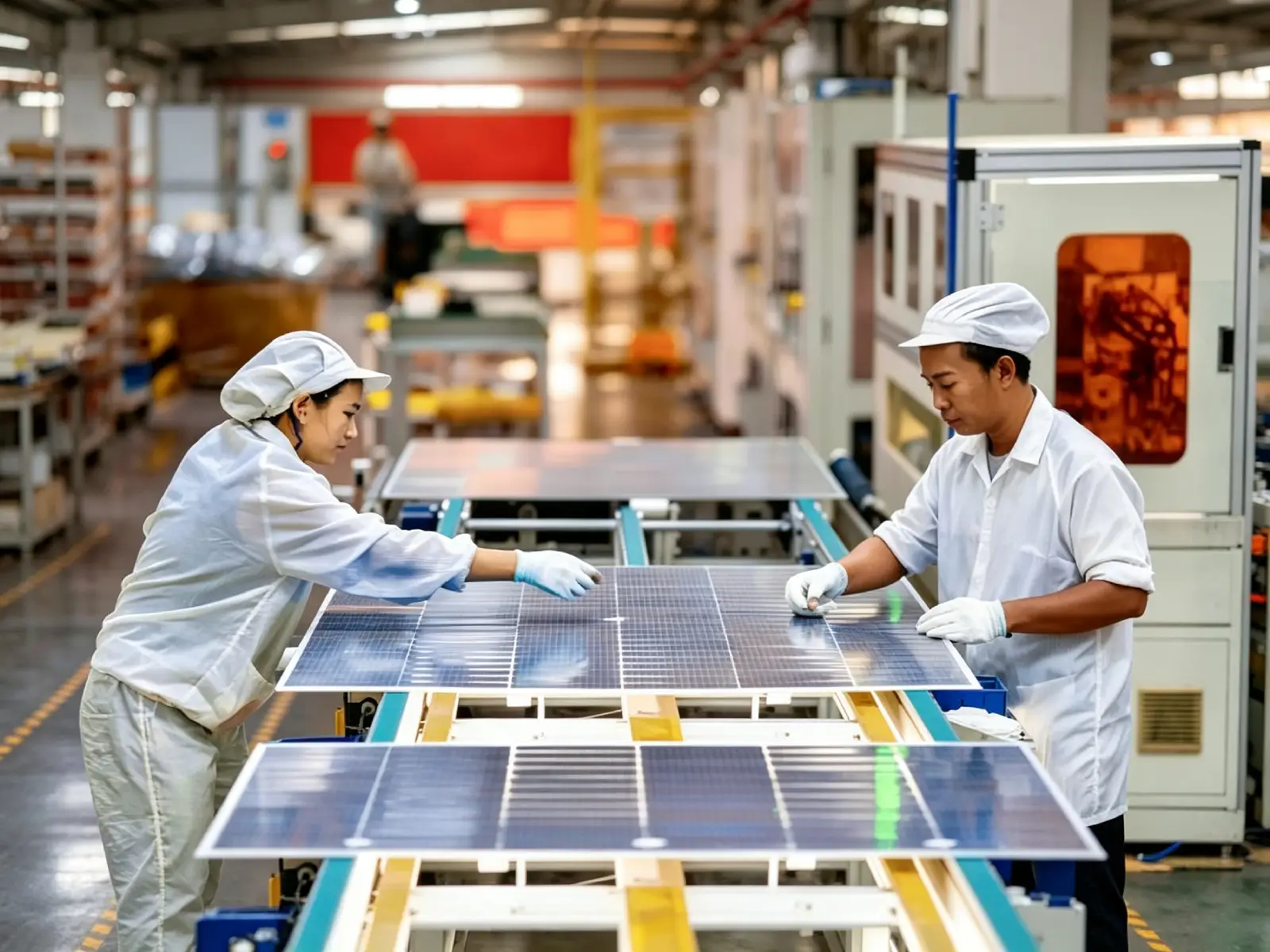
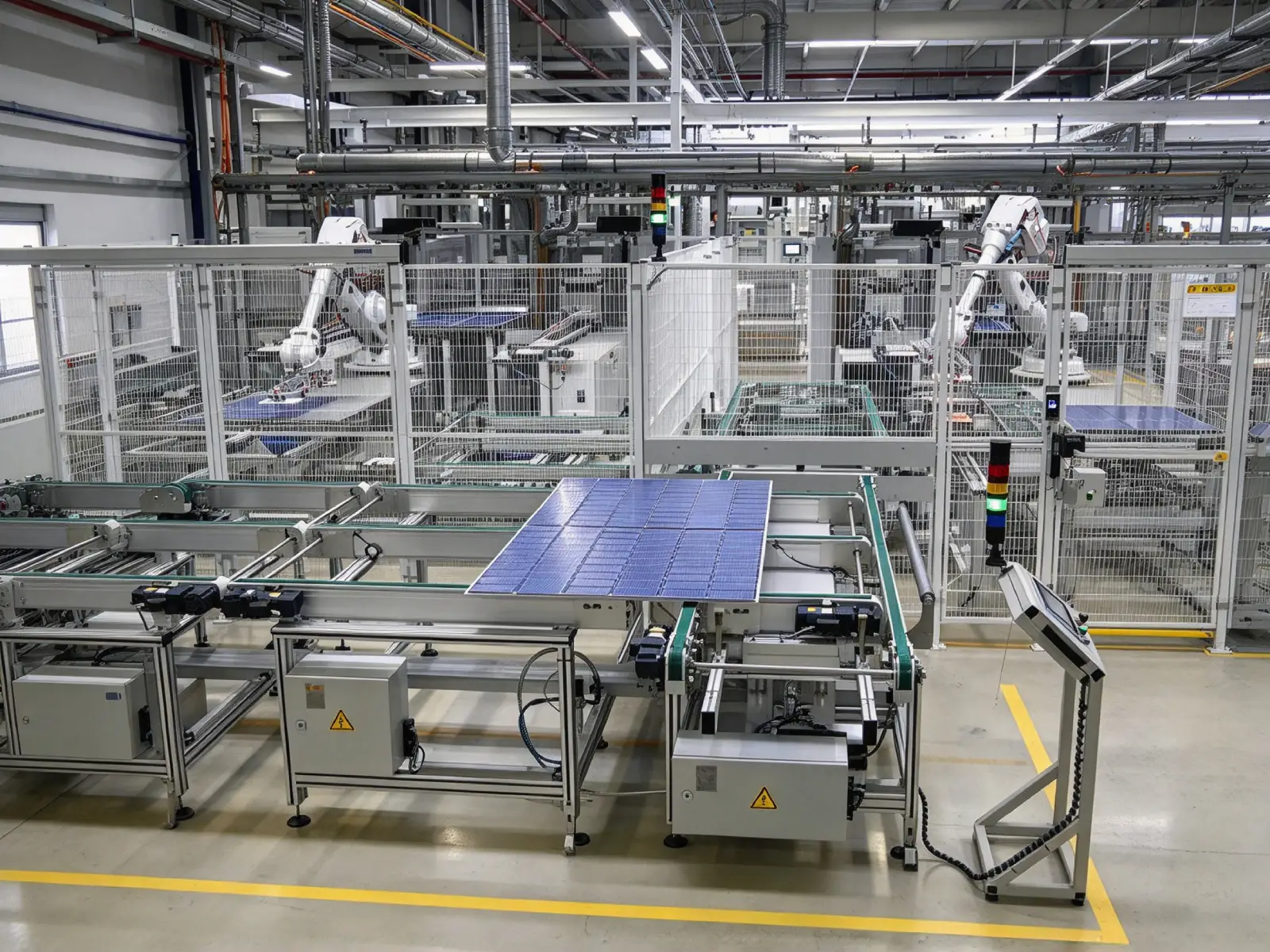
A real manufacturer has production lines, not just a warehouse. Ask for:
-
Annual production capacity (in GW)
-
Number of module production lines
-
Whether they produce their own cells or buy cells
-
Automation level (stringer, laminator, framing, testing)
Why this matters
-
Cell sourcing: factories that buy cells from Tier 1 cell makers (LONGi, Jinko, Trina, etc.) are normal. Factories that cannot name their cell supplier are a risk.
-
Line count: one line vs ten lines changes your priority in the production queue.
-
Automation: manual lines have higher defect rates.
How to verify: Request a live video walkthrough of the production floor — not a pre-recorded marketing video. Ask to see the stringer, laminator, and EL tester in operation.
Supporting reference: The China Photovoltaic Industry Association (CPIA) publishes annual capacity and production data by manufacturer tier.
5. Step 4 — Confirm OEM / ODM Capability
If you sell under your own brand, OEM capability is essential. Confirm:
-
Custom logo and label printing
-
Custom packaging and carton design
-
Custom power binning and flash test reports
-
Custom frame color or junction box brand
-
Minimum OEM order quantity
Questions to ask
-
Can you print our brand on the label and carton?
-
Can you provide a flash test report with our brand name?
-
What is the OEM MOQ?
-
Who owns the warranty obligation for OEM modules?
Key point: OEM is not just a sticker. It affects documentation, warranty, and traceability. Get it in writing.
6. Step 5 — Review Warranty and Insurance
Module warranties are long — 10–12 years product, 25–30 years power. That is only meaningful if the manufacturer will still exist in 10 years.
What to check
Questions to ask
-
Is the warranty backed by the factory or a third party?
-
Is there product liability insurance? With which insurer?
-
What is the claims process and response time?
-
Are warranty terms the same for OEM orders?
Supporting reference: IEC 61215 and IEC 61730 define test standards, not warranty terms. Warranty terms are contractual and must be reviewed separately.
7. Step 6 — Check Export Records and References
A manufacturer with real export experience can show you:
-
Bills of lading (with sensitive data redacted)
-
Destination ports and countries
-
Customer types (distributor, EPC, project)
-
Years of export history
How to verify
Use trade data platforms such as ImportGenius, Panjiva, or Export Genius to check shipment records. Look for:
-
Consistent shipment volume over time
-
Multiple destination markets
-
Repeat customers
Red flag: a manufacturer that claims 10 years of export experience but has no verifiable shipment records.
8. Step 7 — Compare Sample vs Bulk Consistency
The final step is the most practical: does the bulk order match the sample?
Test process
-
Order a sample panel
-
Record flash test data, EL image, and visual inspection
-
Place the bulk order
-
Request pre-shipment inspection with AQL sampling per ISO 2859
-
Compare bulk flash test and EL data against the sample
What to check
-
Power output within stated tolerance (±3% typical)
-
EL image free of micro-cracks and dark cells
-
Label, serial number, and barcode consistency
-
Packaging matches the approved spec
Supporting reference: ISO 2859 defines accepted sampling procedures. IEC 61215 and IEC 61730 define the test standards used for module qualification.
9. Red Flags When Choosing a Manufacturer
Watch for these signals:
-
Cannot provide a business license with manufacturing scope
-
Refuses a live video factory tour
-
Cannot name their cell supplier
-
Quotes a price far below market without explanation
-
No verifiable export records
-
Warranty terms are vague or verbal only
-
Pushes 100% prepayment on a first order
-
Certificate numbers cannot be verified
Any one of these is a reason to slow down. Two or more is a reason to walk away.
10. What to Do Next
Once you have verified your manufacturer:
-
Negotiate pricing using our wholesale solar panel pricing guide
-
Plan your container using our bulk solar panel orders guide
-
Compare the direct model in our factory direct solar panels article
Conclusion
Choosing a solar panel manufacturer is a verification process, not a price comparison. The buyers who get burned are the ones who skip steps because a quote looks attractive.
Use the 7 steps:
-
Tier 1 and certifications
-
Factory entity
-
Production capacity
-
OEM/ODM capability
-
Warranty and insurance
-
Export records
-
Sample vs bulk consistency
If you want to shortlist a verified manufacturer, send us your target spec and volume — we will share our certification documents, factory video, and export records.
Ready to Verify Your Manufacturer?
Send us your requirements and we will reply with:
-
Business license and manufacturing scope
-
IEC / UL / CE certificate numbers
-
Live factory video walkthrough
-
Export records and reference markets
-
Warranty terms and insurance details
What to include in your inquiry:
-
Target wattage and technology
-
Annual volume estimate
-
Destination market
-
OEM / ODM requirements
-
Certification requirements


发表回复